

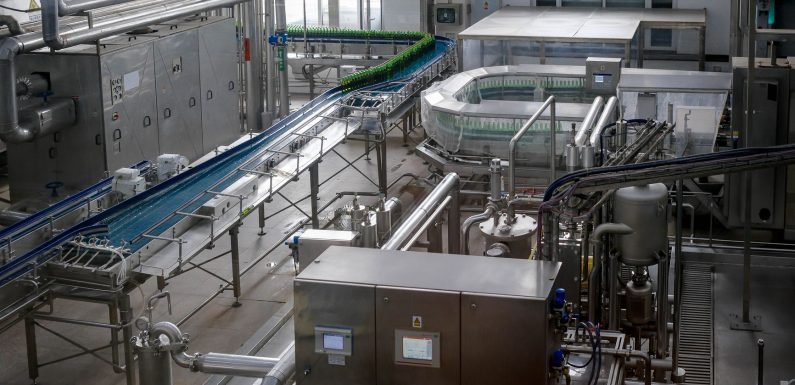
Industrial employment continues to play an important role in modern economies, supporting production, logistics, maintenance, engineering, quality assurance, and technical operations. As manufacturing environments become more advanced, employers increasingly seek professionals who combine practical knowledge with adaptability. For candidates exploring Industrial jobs (industrie jobs), understanding current workplace expectations can make the search more focused and effective. The industrial sector offers diverse career paths for skilled workers, technical specialists, operators, supervisors, and professionals interested in long-term development.
Contents
- Changing Demand Across Industrial Workplaces
- Skills Employers Commonly Seek
- The Importance of Safety and Quality
- Technology and Industrial Careers
- Career Development in the Industrial Sector
- What Job Seekers Should Consider
- Outlook for Industrial Employment
Changing Demand Across Industrial Workplaces
Industrial companies are continuously adapting their operations to improve efficiency, reliability, safety, and product quality. This evolution influences the types of roles available and the skills employers value. Traditional production positions remain important, while technical and technology-oriented roles are becoming increasingly visible.
Modern facilities often require employees who can work with automated equipment, digital monitoring systems, technical documentation, and structured production processes. This creates opportunities for individuals with mechanical, electrical, technical, logistical, and organizational abilities.
Skills Employers Commonly Seek
A strong industrial candidate usually combines technical competence with dependable workplace habits. Employers often look for practical problem-solving, attention to detail, teamwork, punctuality, and a willingness to follow established procedures.
Technical skills can vary according to the position. Production operators may need equipment knowledge, while maintenance professionals require troubleshooting abilities. Quality-focused positions may involve inspection methods and documentation. Supervisory roles generally require communication, planning, and team coordination.
Adaptability is also becoming increasingly valuable. Industrial workplaces can introduce new machinery, software, processes, and safety requirements. Employees who are comfortable learning and applying new information can remain effective as operational needs evolve.
The Importance of Safety and Quality
Safety remains a central consideration across industrial environments. Employees may work around machinery, tools, materials, transportation equipment, or specialized production systems. For this reason, employers value candidates who understand workplace procedures and take safety responsibilities seriously.
Quality is equally important. Consistent production depends on accurate processes, careful inspection, and effective communication between teams. A small error can affect productivity, customer satisfaction, or operational continuity. Employees who demonstrate concentration and responsibility can contribute significantly to maintaining reliable standards.
Technology and Industrial Careers
Technology is reshaping industrial workplaces without eliminating the importance of human expertise. Automated systems can support repetitive activities, while skilled employees remain essential for monitoring, maintenance, decision-making, troubleshooting, and process improvement.
Digital tools can also influence recruitment requirements. Candidates may benefit from familiarity with production software, computerized equipment, digital reporting, or data-supported workflows. However, technology knowledge is most valuable when combined with practical industrial understanding.
Career Development in the Industrial Sector
Industrial careers can provide opportunities for professional progression. Employees may begin in operational roles and gradually develop specialized knowledge, leadership capabilities, or technical expertise. Additional training can support movement toward maintenance, quality control, logistics, production planning, or supervisory responsibilities.
Professional development does not always follow a single path. Some workers prefer technical specialization, while others move toward coordination and management. Identifying personal strengths and career interests can help candidates select positions that provide meaningful long-term prospects.
What Job Seekers Should Consider
When reviewing industrial vacancies, candidates should examine the responsibilities, required qualifications, working environment, shift expectations, and opportunities for development. A position should match both current capabilities and realistic career goals.
It is also useful to prepare a clear résumé that highlights relevant experience, technical skills, certifications, and practical achievements. Employers generally benefit from seeing how a candidate has contributed to workplace reliability, productivity, safety, or quality.
Outlook for Industrial Employment
The industrial sector remains closely connected to technological progress, infrastructure, supply chains, and consumer demand. As workplaces modernize, employment opportunities are likely to continue evolving toward combinations of technical expertise and digital awareness.
For job seekers, this environment creates a strong reason to keep learning and remain open to new responsibilities. A thoughtful job search, supported by relevant skills and a professional application, can help candidates identify suitable opportunities and build sustainable careers within the industrial sector.
What You Need to Know
- Industrial employment supports various functions including production, logistics, and maintenance within modern economies.
- Employers are increasingly seeking professionals who possess both practical knowledge and adaptability in advanced manufacturing environments.
- The types of roles available in the industrial sector are evolving, with a growing demand for technical and technology-oriented positions.
- Candidates are expected to demonstrate skills such as problem-solving, attention to detail, and effective communication, alongside technical competencies pertinent to their roles.
- Safety and quality are paramount in industrial environments, necessitating candidates to understand and prioritize workplace safety procedures.
- Technology is significantly transforming industrial careers, creating a need for job seekers to combine technical knowledge with practical industrial experience.
